
Capture.
Capture a meeting, call, or existing source without losing the oral context.
After a meeting, the essentials get lost: who decided what, by when, in which tool. Taveni is designed to structure decisions and actions for your teams to review before any external handoff. The path to a business tool is verified and scoped during the evaluation.
Decisions linked to their evidence · Actions with who, what, by when · Human validation before sending
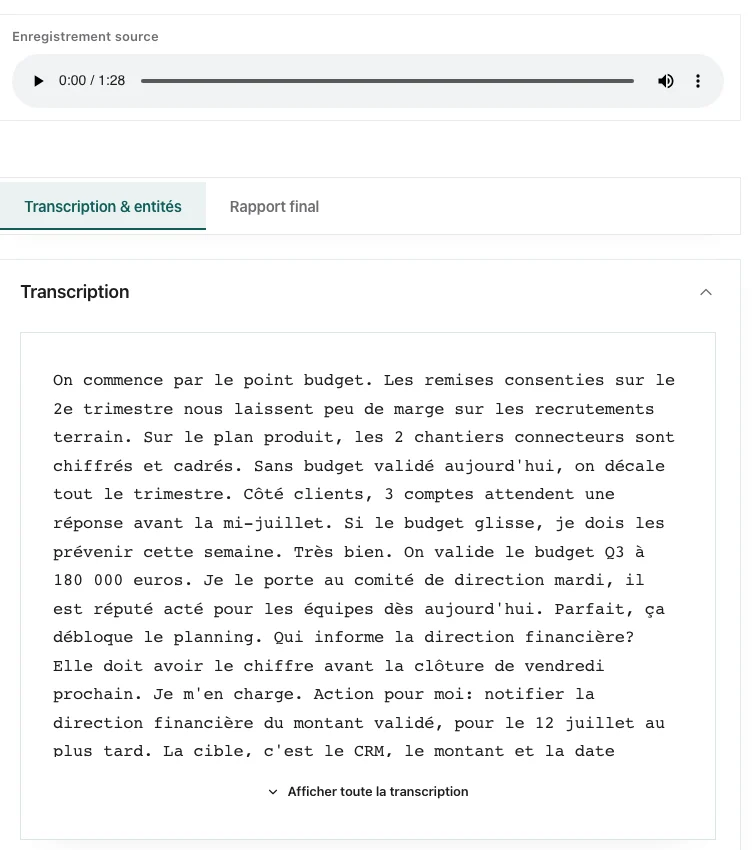
Goal: less unnecessary context. The evaluation measures what structured context avoids reprocessing without claiming savings before observation.
Your corrections stay under your control. Their storage, use, and any sharing with third-party models or tools are scoped before the evaluation.
Summary tools produce recaps that nobody reopens. The real value is elsewhere: in the decisions your teams make out loud, own, and need to find, review, and execute.
Budget, priority, an exception granted to a customer: the decision is made out loud, then lost inside a long transcript.
"I'll handle it" is not clear enough to create a reliable task in a project or support tool.
The recap exists, but the action reaches neither the CRM, support desk, nor project tool — and nobody controls who can see what.
Taveni is designed to turn meeting material into sourced operational memory: decisions and actions to review before any handoff. The evaluation verifies what is actually retained, useful, and reusable in your workflow.
The evaluation verifies what can be captured, structured, and reviewed. A handoff to a business tool is included only after human approval and verification of the destination path.
Capture a meeting, call, or existing source without losing the oral context.
Add roles, projects, vocabulary, access rules, evidence, and expected destination.
Confirm important decisions and actions or keep incomplete items pending.
After approval, use the connector verified in scope or a documented manual export.
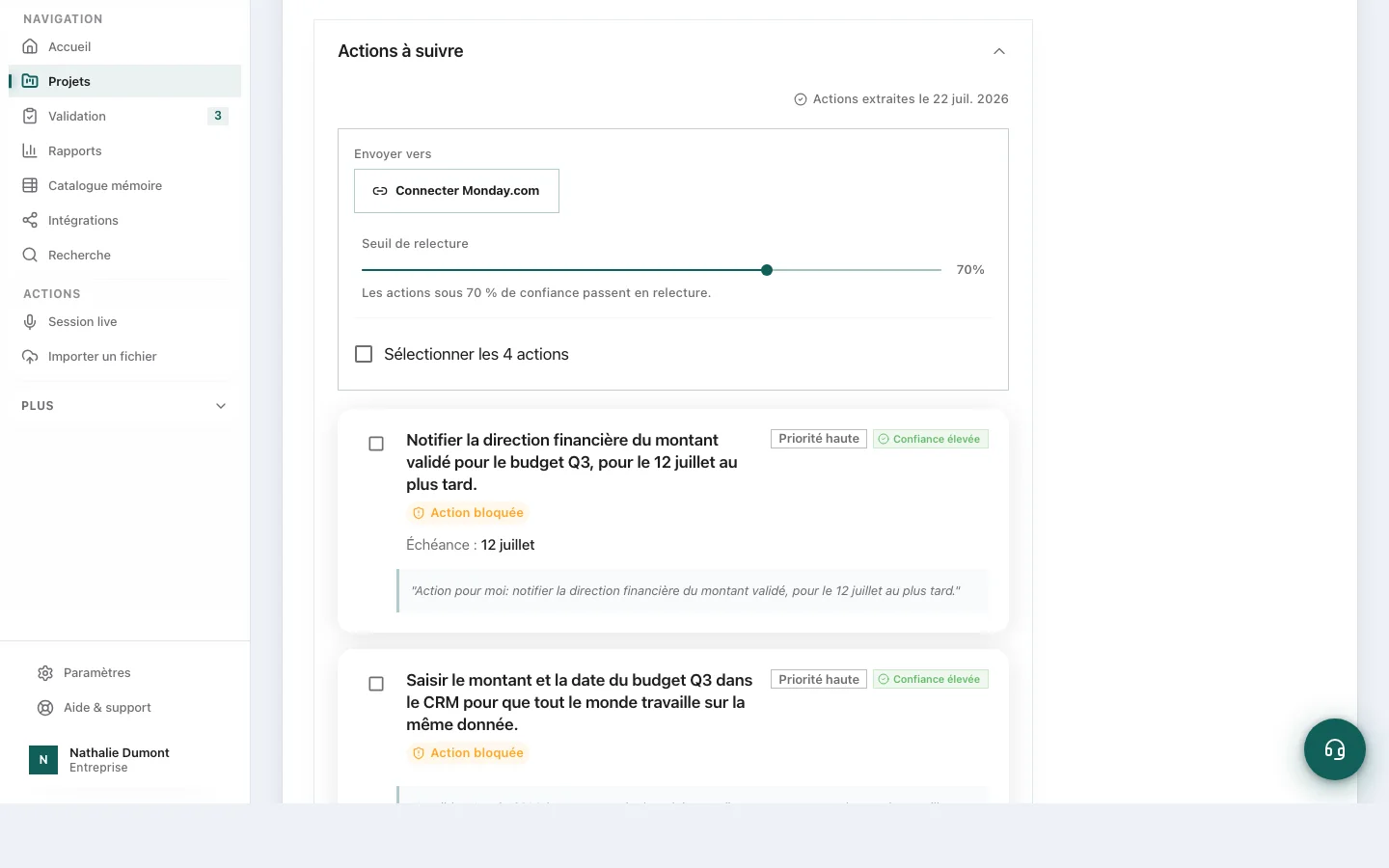
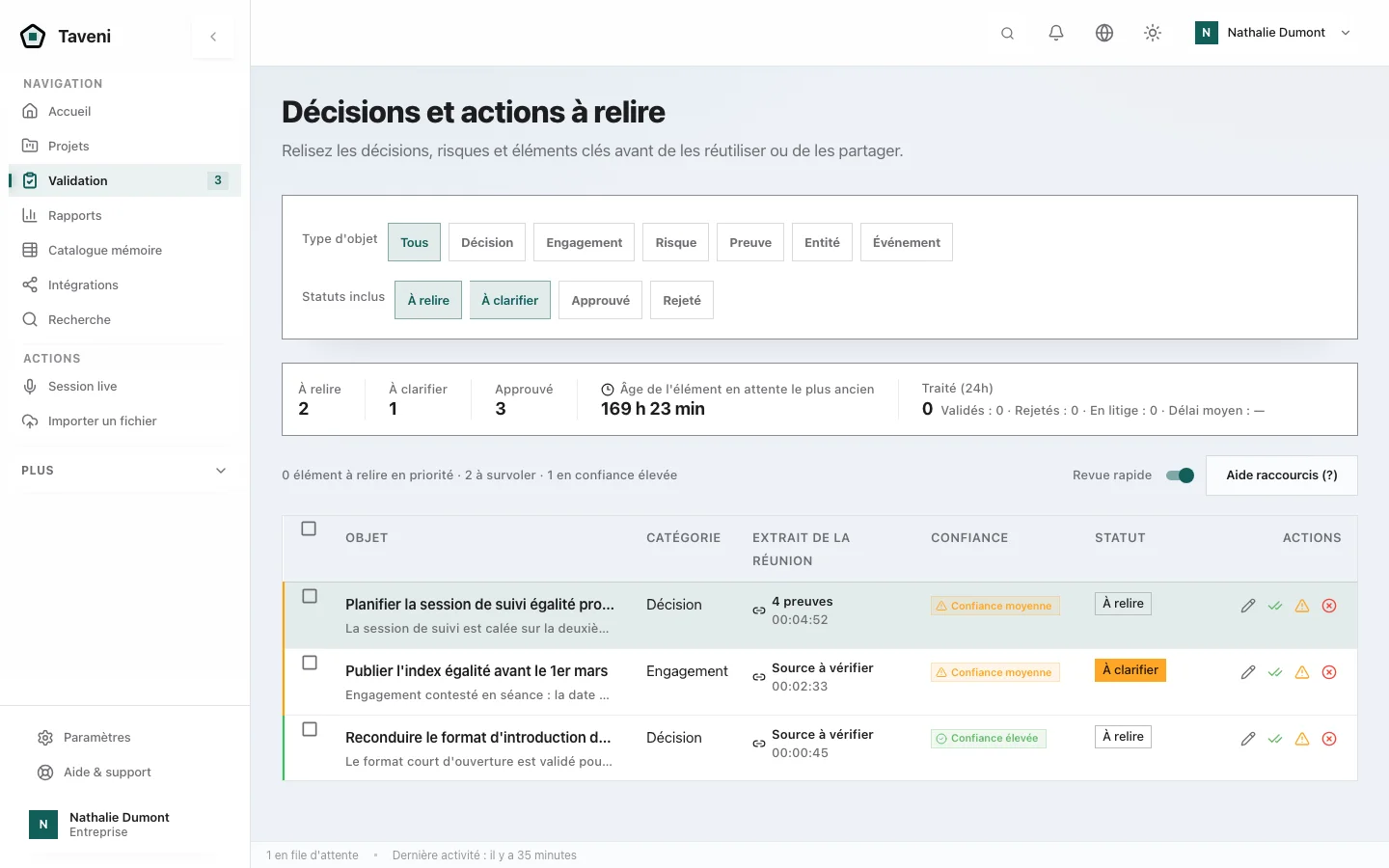
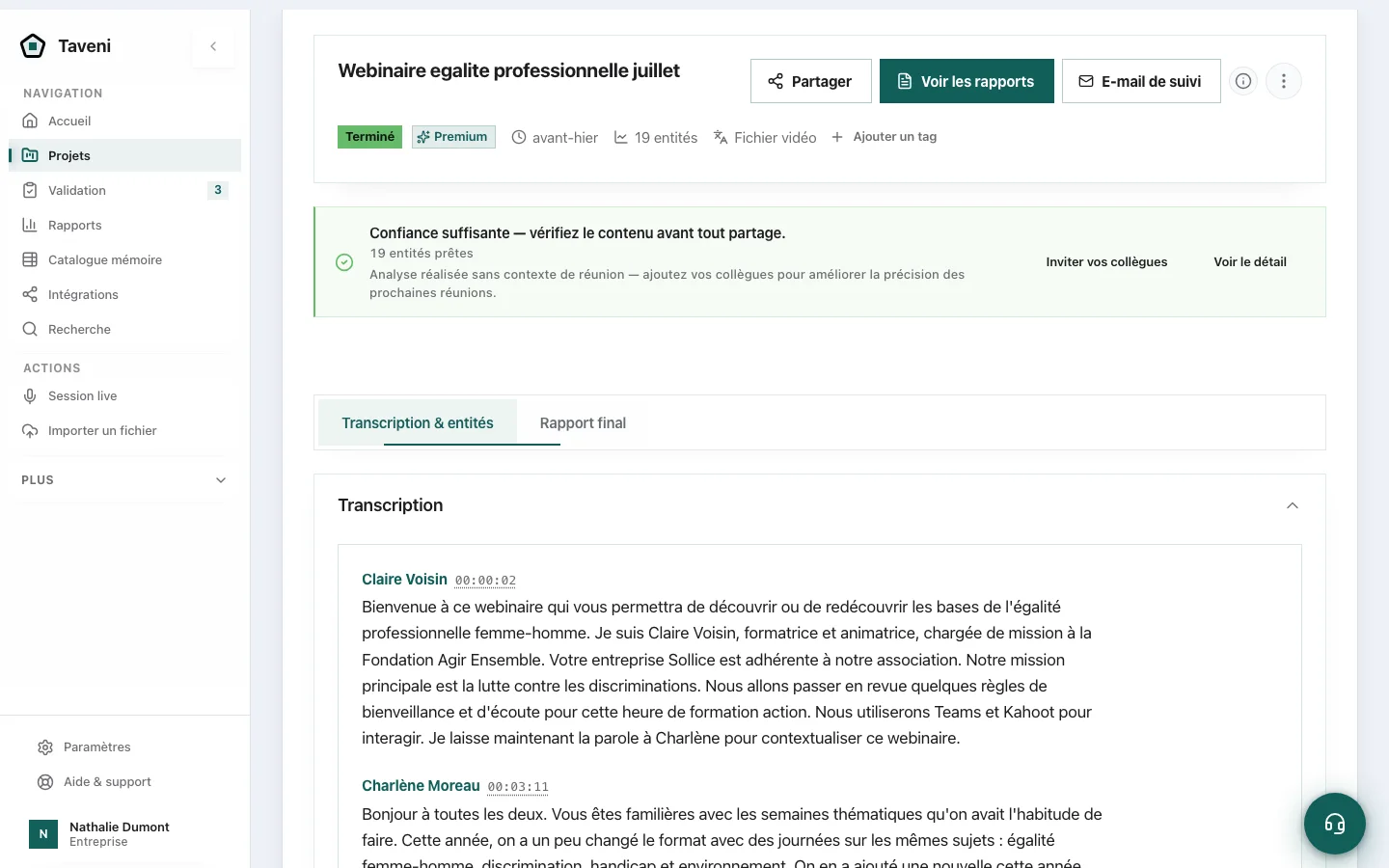
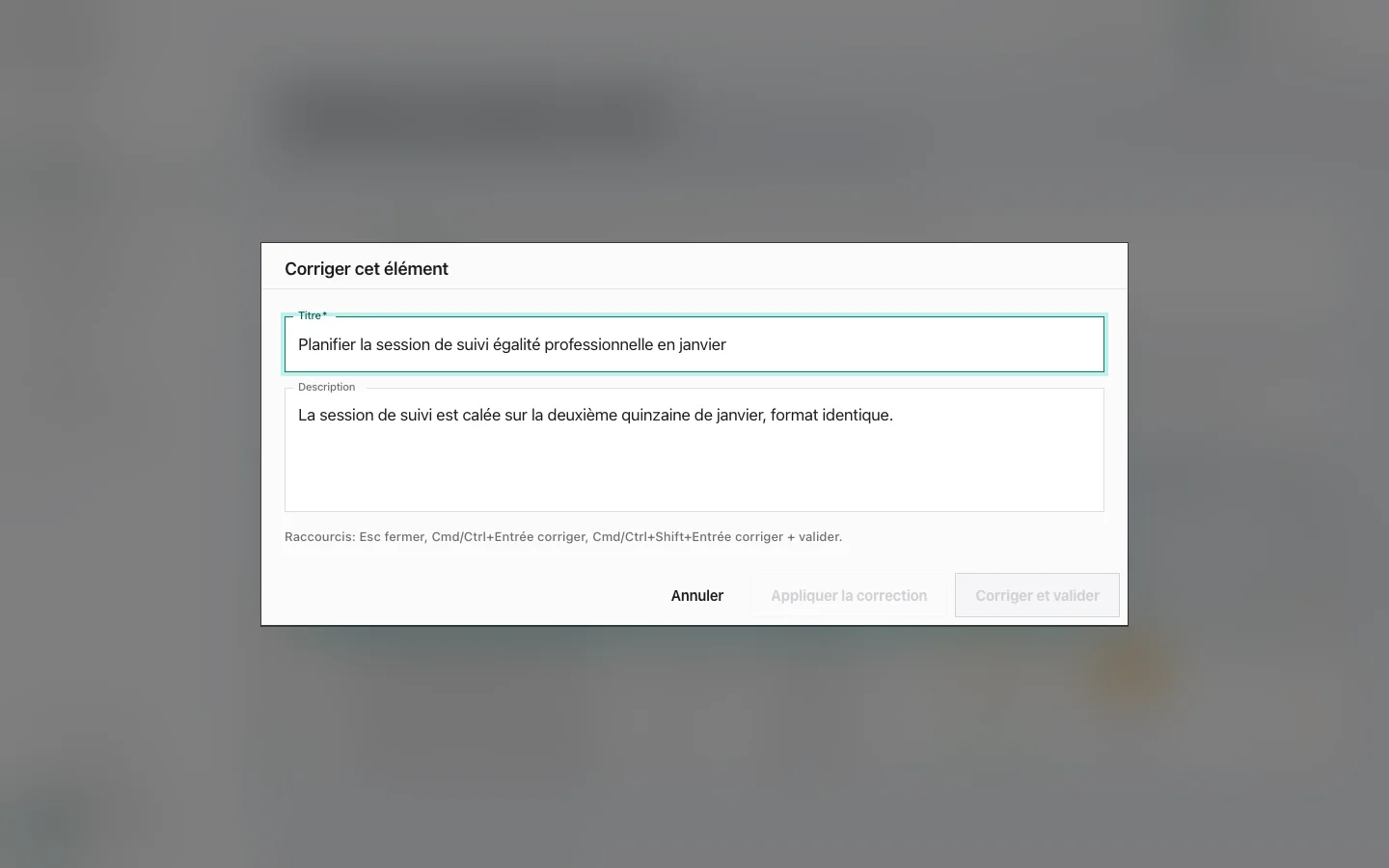
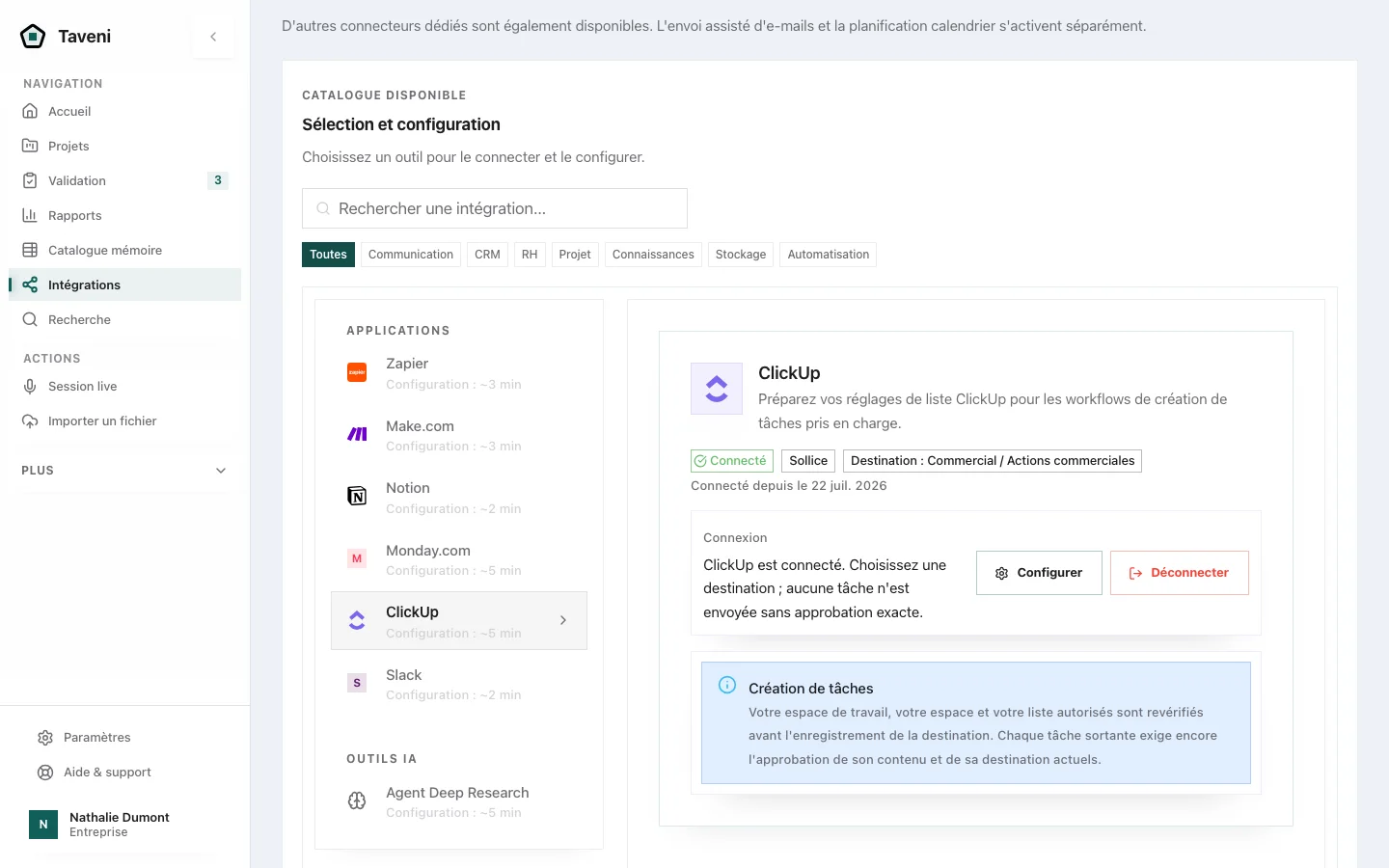
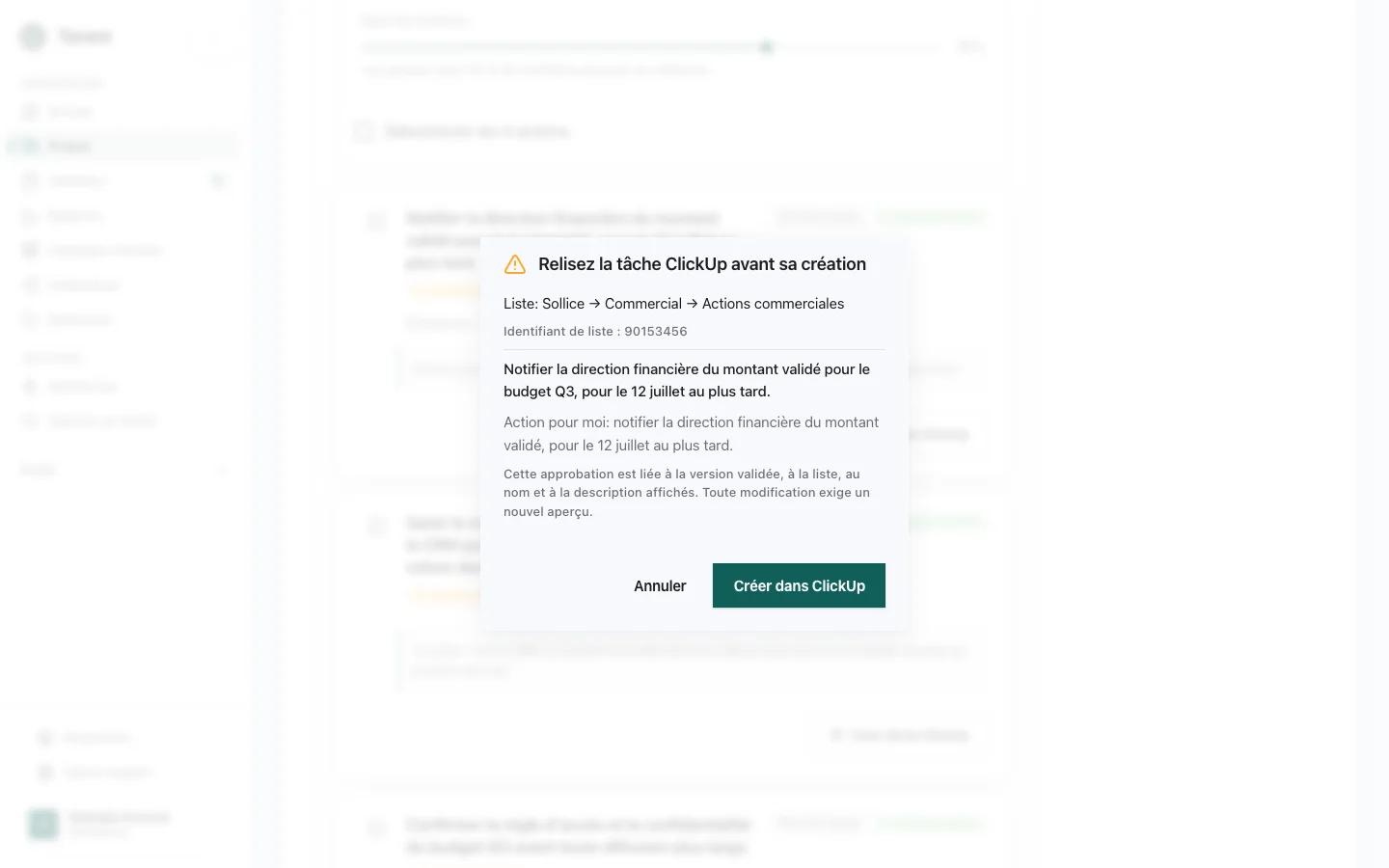
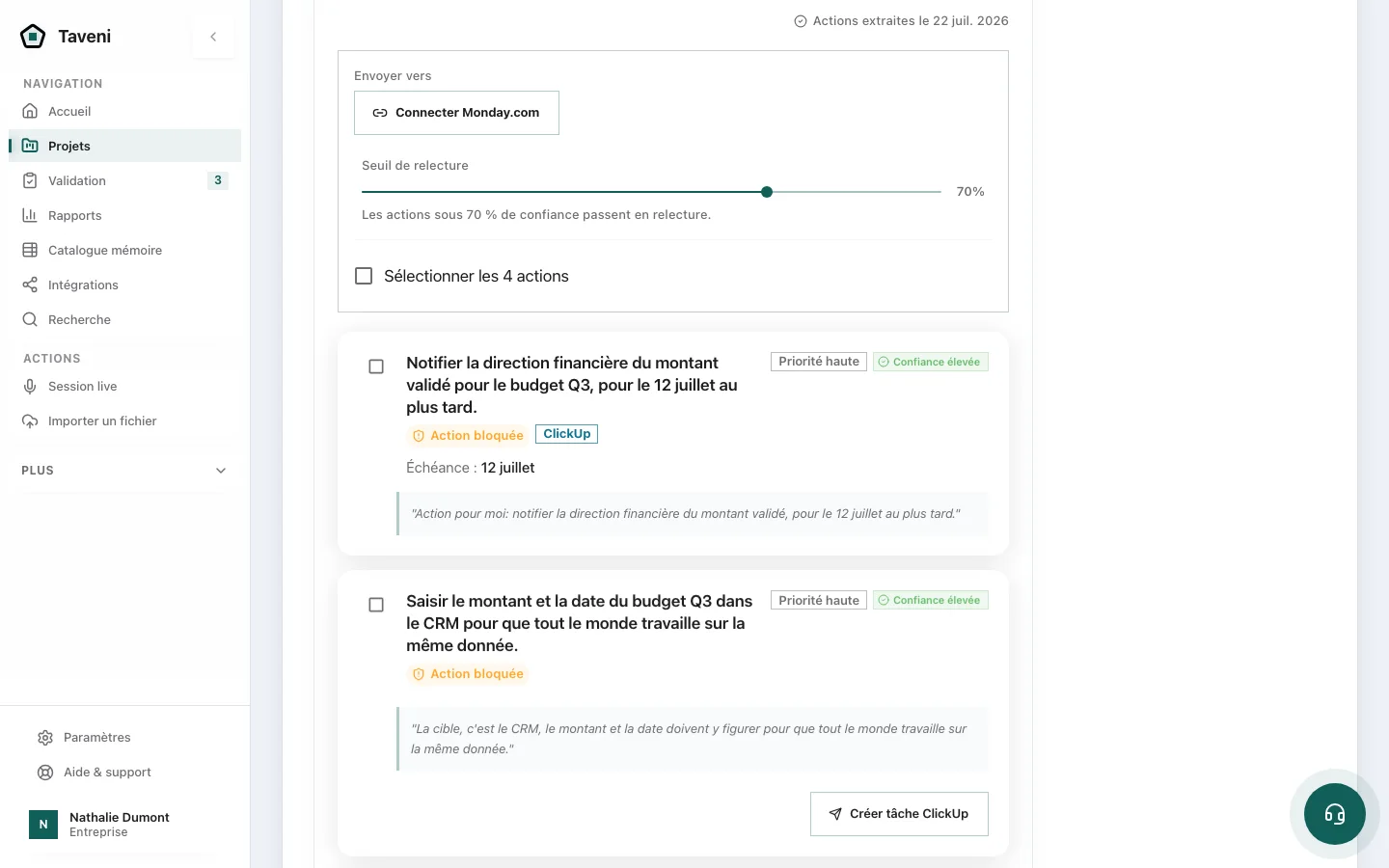
Automatic notes tell you what was said. Taveni aims to structure what deserves operational review: source, owner, status, access rule, and proposed destination. The evaluation verifies this behavior on a bounded workflow.
As AI gets cheaper, more unfiltered context may be sent back through it. Taveni is designed to separate raw verbatim from qualified information. The context avoided and its cost effect must be measured during the evaluation, not promised in advance.
When a resource gets cheaper, its use may increase. For AI, that makes calls and processed context worth measuring; the Taveni evaluation compares the baseline with the observed scope without assuming the outcome.
Cost depends on the model, volume, and workflow. The evaluation compares a baseline with the context actually processed without promising savings before measurement.
When an A2A/MCP context flow is included and verified, meeting profile, business vocabulary, and organizational context are qualified before extraction. Source, owner, access, and destination rules are tested in scope; they do not prove general availability.
{
  "meeting_title": "Q3 sales review",
  "participants": [
    { "name": "Nathalie Dupont",
      "role": "CFO" },
    { "name": "Karim Benali",
      "role": "Sales Lead" }
  ],
  "user_profile": {
    "company": "Hyle Labs",
    "job_title": "Finance lead"
  },
  "vocabulary": [
    "ARR", "renewal", "Q3 committee"
  ],
  "org_projects": ["Q3 Expansion"],
  "org_clients": ["Acme Corp"],
  "org_products": ["Taveni"],
  "output_instruction": "Prioritize decisions, actions, and evidence.",
  "routing_rules": "Do not send without owner, source, or right"
}An AI proposal has operational value only after human review. The evaluation documents how decisions, corrections, and rules are stored, protected, and reused; it assumes no absolute portability or protection.
If the model changes, the evaluation verifies which decisions, corrections, and rules remain exportable and reusable within the agreed scope.
A Taveni evaluation does not promise full automation. On one of your real processes, it measures four simple things:
search time · manual re-entry · qualified incidents · observed AI cost
We build products for teams whose decisions and actions move between conversations, tools, and assistants. Taveni is designed to structure oral decisions as decisions, evidence, and actions to review within a verified scope.
Our guiding line is simple: delegate the task, not the learning. AI should reduce manual entry without taking away the team's ability to review, limit, and decide what gets executed.
“I created Taveni because our teams' most important decisions lived in recaps nobody reread. We're building the tool that makes them executable — without ever taking the decision away from humans.”
Adryan Perez — founder, Hyle Labs · Lyon
French SASU · RCS Lyon · Taveni in scoped evaluation
Send us your context: meeting type, target tool, GDPR constraints, and success criteria. We'll reply with a proposed scope, measurement criteria, and the conditions required for the evaluation.
Not necessarily. The evaluation starts from your current toolset and defines one handoff. Depending on verified availability, that handoff uses an in-scope connector or a documented manual export.
Processing depends on the agreed scope. Before an evaluation, we document the data involved, services used, access, retention, and deployment constraints.
The evaluation documents what remains stored, exportable, and reusable if the model changes. Portability depends on the verified product scope, formats, and contract terms.
Taveni is in a scoped evaluation phase. Scope, success criteria, required resources, and commercial terms are defined before anything starts.
Evaluations target one handoff to a CRM, support, or project-management tool. Connector availability is checked during scoping; a manual export may be used as a fallback.